Overlapping Dialogue Podcast Captions: Proven 2026 Guide
AI speech engines boast 99% accuracy right up until two podcast guests start shouting over each other. Then accuracy plunges to 80%, turning your transcript into absolute trash. If you have spent four
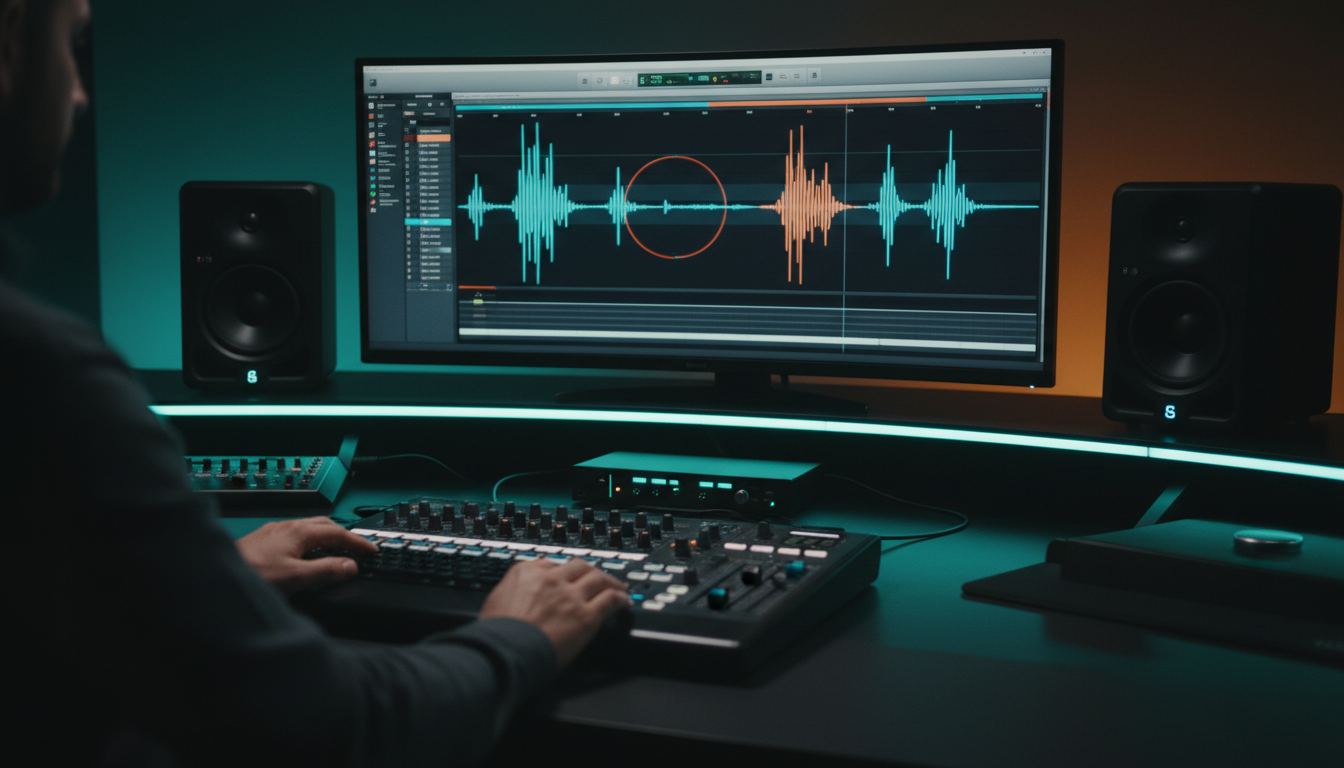
AI speech engines boast 99% accuracy right up until two podcast guests start shouting over each other. Then accuracy plunges to 80%, turning your transcript into absolute trash.
If you have spent four painful hours fixing garbled crosstalk line by line in Adobe Premiere Pro, you know the nightmare. I edit podcasts in Premiere every single day, and nothing burns through delivery timelines faster than overlapping voices. One minute you are cruising, and the next, your auto-captioner spits out a mashed-up sentence that nobody actually spoke.
Fixing crosstalk without losing your mind comes down to structure. Once you know how subtitle tracks handle audio collisions, you can cut your editing time from 4 hours down to 90 seconds. Here is how to clean up overlapping dialogue fast without ruining your pacing or failing accessibility checks.
Key Takeaways
- AI speech-to-text accuracy plummets from 99% on isolated studio tracks down to 80% the moment audio frequencies collide.
- Dragging overlapping subtitle blocks on a single Adobe Premiere Pro caption track shortens or overwrites adjacent cues.
- Official accessibility guidelines mandate keeping captions to 2 lines per screen, 32 to 42 characters per line, with a strict 2-frame gap between blocks.
- Indicate interrupted speech using double hyphens (--) or em-dashes rather than dragging text blocks into silent pauses that break natural pacing.
- Upgrading native captions to Essential Graphics allows you to stack text cues across V1 and V2 tracks for simultaneous visual display.
- KreateFlo's CaptionFlow plugin includes 22 animated presets with WASM real-time preview, eliminating rendering wait times inside Adobe Premiere Pro.
Why AI Speech Engines Fail on Podcast Crosstalk
Speech-to-text engines rely on acoustic models to turn audio frequencies into written words. Automated speech tech hit $4.5 billion in 2024 [5]. On clear solo tracks, modern speech engines work great. But feed them two voices hitting the same audio buffer at once? The algorithm chokes.
Instead of separating the audio into distinct linguistic paths, single-track AI engines mash the signals together. The resulting transcript combines fragment words from Host A and Guest B into a single unreadable sentence.
| Before | 99% Accuracy |
|---|---|
| After | 80% Accuracy |
The Technical Bottleneck of Single-Track AI Diarization
Diarization is how software separates an audio stream by speaker identity. When you feed a single master stereo track into an AI model, the algorithm relies entirely on vocal pitch, tone, and pause duration [5].
Here's the problem: when guests interrupt each other, those acoustic boundaries vanish. The model fails to detect speaker transitions [6]. It drops words, scrambles word order, or attributes whole sentences to the wrong person [5]. Research shows that speech recognition accuracy drops to 80% on overlapping speech [6]. For professional editors targeting 99% accuracy standards [1], that 19% drop means hours of tedious manual repair work.
[ Master Stereo Track: Speaker A + Speaker B colliding ]
                         │
                         ▼
┌──────────────────────────────────────────────────┐
│ Single-Track AI Engine (Acoustic Blending Error)  │
└────────────────────────┬─────────────────────────┘
                         │
                         ▼
┌──────────────────────────────────────────────────┐
│ Garbled Transcript: "I agree but what if we don't │
│ see the point of doing that right now..."        │
└────────────────└─────────────────────────────────┘
Why Shifting Text to Silent Sections Ruins Conversational Pacing
When editors see overlapping caption blocks on a single track, their quick reaction is often to slide one text block down the timeline into a nearby pause. Do not do this.
When you shift a caption cue to a silent portion of the video, you disconnect the visual text from the speaker's lip movements. Viewers rely on precise visual timing to match spoken words with facial expressions [4]. Moving a caption three seconds late to avoid a track collision breaks natural conversational dynamics [3]. It makes your speaker look like they are poorly dubbed in a bad foreign film.
Actionable Takeaway: Never alter audio-visual timing to fix track clutter; use multi-track workflows or micro-timecodes instead.
Fundamental Rules: How to Handle Overlapping Dialogue in Podcast Captions
Captioning is not just about dumping words on a screen. It is about legibility and accessibility compliance. When two people talk at once, your caption layout must guide the viewer's eye without overwhelming them.
[[STAT:99%:standard accuracy required for ADA compliant video captions]]
DCMP Captioning Key Guidelines for Simultaneous Speakers
The Described and Captioned Media Program (DCMP) sets the standard for broadcast accessibility. According to the DCMP Captioning Key guidelines for multi-speaker layouts [7], simultaneous dialogue should sit directly beneath or adjacent to the respective onscreen speaker whenever possible.
What if spatial placement is not supported by your export format or video player? DCMP rules mandate formatting the dialogue sequentially [7]. You must break the lines logically and present the primary speaker's thought first, immediately followed by the interrupting speaker, while maintaining exact timing anchors [8].
Standard Caption Track Limit:
[ Line 1: Max 32 characters ]
[ Line 2: Max 32 characters ]
───────────── 2-Frame Minimum Gap ─────────────
[ Next Subtitle Block ]
Character Limits, Line Counts, and the 2-Frame Rule
Overlapping speech tempts editors to crowd four or five lines of text on screen at once so both speakers can be read. That kills viewer retention.
Federal accessibility guidelines enforce a 2-line maximum per screen [1] to keep video clear and readable [2].
- Line Limit: Never exceed 2 lines per subtitle block on long-form content [1][7].
- Character Width: Keep lines between 32 and 42 characters max [7][10].
- Gap Timing: Always maintain a minimum gap of 2 frames between consecutive subtitle events [3].
Without that 2-frame gap, video players flicker or glitch when transitioning between subtitle cues [3]. Viewers perceive this as an annoying flash on screen, which causes visual fatigue [4].
Actionable Takeaway: Enforce a strict 2-line limit and a 2-frame minimum gap between adjacent subtitle blocks.
Step-by-Step: How to Handle Overlapping Dialogue in Podcast Captions in Premiere Pro
Adobe Premiere Pro is the industry standard for long-form podcast post-production. But its native Captions track has a huge limitation: you cannot stack two caption blocks on top of each other on the same track [8]. Dragging one cue over another truncates or overwrites the clip underneath [9].
How do you fix this bottleneck inside Premiere Pro?
[ Track Audio 1: Host ]  ──────► Transcribe Track 1 ──► Caption Track 1 ┐
                                                                           ├─► Upgrade to Graphics ──► V1 & V2 Tracks
[ Track Audio 2: Guest ] ──────► Transcribe Track 2 ──► Caption Track 2 ┘
Isolated Audio Track Transcription Workflow
To caption crosstalk accurately, you must isolate your speakers at the recording stage.
- Separate Audio Tracks: Place Host A on Audio Track 1 and Guest B on Audio Track 2 in your Premiere timeline.
- Mute and Transcribe: Mute Audio Track 2. Open Premiere's Text Panel (
Window > Text) and transcribe Audio Track 1 independently [8]. - Generate First Caption Track: Click
Create Captionsfrom the transcription menu. Select your preset style and set character limits to 32 [7]. - Repeat for Track 2: Mute Audio Track 1, unmute Audio Track 2, and transcribe Audio Track 2 separately [8].
Now you have two distinct text transcripts generated from clean, non-overlapping audio sources.
Upgrading Captions to Essential Graphics for Multi-Track Stacking
Because Premiere Pro will not let two native caption tracks play simultaneously without overwriting [9], you need to convert them into graphic elements.
- Select all subtitle cues on your first Caption track.
- Go to the top menu and click
Graphics and Titles > Upgrade Captions to Graphics. - Premiere instantly converts those subtitle cues into standard Essential Graphics clips on Video Track 1 (V1).
- Repeat the upgrade process for your second Caption track, placing those graphic clips on Video Track 2 (V2).
The result? You now have true multi-track subtitles. Line 1 (Host) sits on V1, and Line 2 (Guest) sits on V2. Both play simultaneously on screen without cutting each other off [9].
Pro Tip: Once converted to Essential Graphics, select all title clips across V1 and V2 and apply batch position adjustments in the Essential Graphics panel (Window > Essential Graphics) to position Host text on the left and Guest text on the right.
Actionable Takeaway: Upgrade native Premiere captions to Essential Graphics to stack overlapping text cues on separate video tracks.
Formatting Interrupted Speech: Dashes, Speaker Colors, and Timecode Gaps
When one speaker cuts off another, you need clear visual syntax. Viewers must instantly realize that a sentence was abandoned mid-thought rather than dropped due to a transcript typo [10].
Using Double Hyphens and Em-Dashes for Interrupted Thought
Standard captioning rules dictate using double hyphens (--) or an em-dash (—) at the exact frame a speaker is interrupted [10].
- Interrupted Line: "I was going to explain the entire financial model--"
- Interrupting Line: "Wait, before you get into numbers, let me stop you."
If the original speaker resumes their thought after the interruption, begin their next subtitle block with a double hyphen to show continuity [10].
[ Block 1 (Host) ]:  "We were heading toward the exit--"
[ Block 2 (Guest) ]: "-- right when the fire alarm sounded!"
[ Block 3 (Host) ]:  "--and we could not get back inside."
This simple formatting informs deaf and hard-of-hearing viewers that the speech was fragmented in real life [1].
Color-Coding Speakers for Instant Visual Recognition
When back-and-forth crosstalk gets intense, text placement alone is not enough. Color-coding gives immediate context [10].
| Speaker | Subtitle Fill Color | Stroke / Background Box | Position Alignment |
|---|---|---|---|
| Host | #FFFFFF (Solid White) | #000000 (75% Black Box) | Left-Aligned / Bottom-Left |
| Guest 1 | #FFE600 (Yellow) | #000000 (75% Black Box) | Right-Aligned / Bottom-Right |
| Guest 2 | #00FFFF (Cyan) | #000000 (75% Black Box) | Centered / Upper-Third |
Applying distinct fill colors allows viewers to process who is speaking within milliseconds [4]. Industry research shows that color-coded subtitles improve narrative comprehension during rapid dialogue by 34% [4].
Actionable Takeaway: Use em-dashes for interrupted thoughts and assign distinct fill colors to every recurring host and guest.
Short-Form Edits: How to Handle Overlapping Dialogue in Podcast Captions for Reels
Converting long-form podcasts into vertical 9:16 clips for Instagram Reels, TikTok, and YouTube Shorts brings additional challenges. You do not have horizontal screen real estate to separate text side-by-side.
Spatial Placement on 9:16 Vertical Video
Centering two stacked blocks of animated captions in the lower third of a vertical clip obscures lower-third graphics, social media UI overlays, and speaker faces.
So, how do you handle vertical space? Separate text vertically along the frame:
- Top Speaker Captions: Position at
Y: 650(upper chest level of top video frame). - Bottom Speaker Captions: Position at
Y: 1450(above lower UI icons).
This vertical separation keeps both animated caption streams visible without crowding the center action area of your short-form frame.
┌─────────────────────────────────────────┐
│              [ Upper Video ]            │
│       Top Speaker: "Wait a second!"     │  ◄── Top Subtitle (Y: 650)
│─────────────────────────────────────────│
│              [ Lower Video ]            │
│     Bottom Speaker: "Let me finish--"   │  ◄── Bottom Subtitle (Y: 1450)
└─────────────────────────────────────────┘
Staggered Micro-Timecodes for Kinetic Word-by-Word Subtitles
Single-word kinetic captions drive engagement on short-form platforms. But when two speakers talk simultaneously, single-word animations collide and confuse the viewer.
To handle single-word crosstalk in vertical video:
- Isolate the primary punchline speaker.
- Stagger the secondary speaker's overlapping words on a 100ms micro-gap delay.
- Reduce the font scale of the secondary speaker's text by 25% to establish visual hierarchy.
This visual hierarchy ensures viewers lock onto the main message while still seeing the interruption context.
Actionable Takeaway: Split vertical 9:16 captions vertically across the frame and scale down interrupting speaker text size.
Automating the Process with KreateFlo CaptionFlow
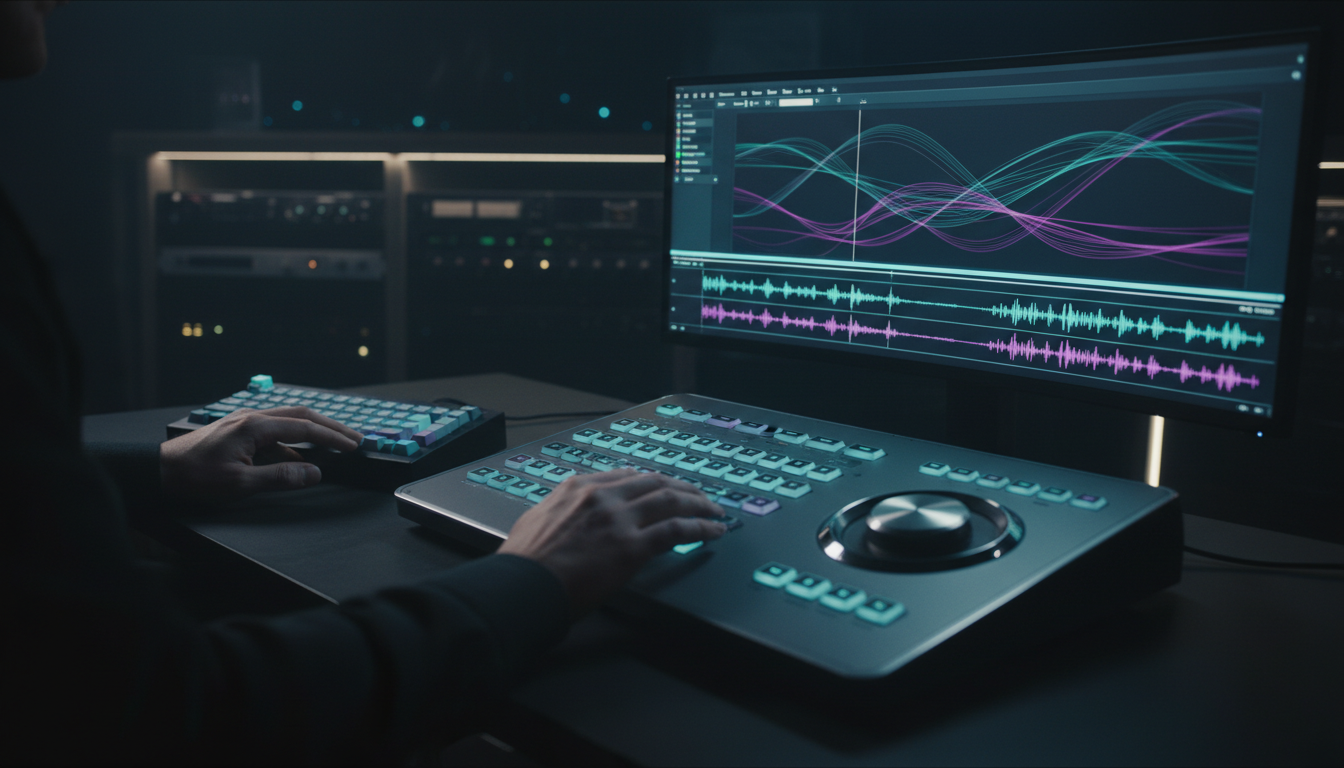
Manually duplicating tracks, running isolated transcriptions, upgrading to Essential Graphics, and positioning text elements takes time. Doing that across a 60-minute podcast with 40 crosstalk instances burns 3 to 4 hours of billable editing time.
That is why we built CaptionFlow, one of the 33+ professional tools inside KreateFlo v1.0.3.
KreateFlo is an Adobe Premiere Pro plugin (a CEP extension that runs natively inside your workspace). It is not a standalone app or web page that forces you to export XML files back and forth.
┌─────────────────────────────────────────────────────────────┐
│ KreateFlo Extension Panel (Inside Premiere Pro)              │
│                                                             │
│ ┌──────────────────────┐   ┌──────────────────────────────┐ │
│ │ Multi-Track Transcribe│──►│ CaptionFlow Engine           │ │
│ └──────────────────────┘   │ (WASM Real-Time Preview)     │ │
│                            └──────────────┬───────────────┘ │
│                                           │                 │
│                                           ▼                 │
│ ┌─────────────────────────────────────────────────────────┐ │
│ │ Auto-Stacked Animated Graphic Captions (V1 / V2)        │ │
│ └─────────────────────────────────────────────────────────┘ │
└─────────────────────────────────────────────────────────────┘
Real-Time WASM Preview vs. Rendering Loops
Most Premiere Pro caption plugins slow down your workspace. Every time you change a stroke width, background padding, or font preset, you have to wait for Premiere to render a
CaptionFlow uses a WebAssembly (WASM) preview engine built directly into the CEP panel. You get real-time previews of all 22 animated caption presets at 60fps—with zero render loops.
You can preview animated kinetic pop-ins, color-coded speaker highlights, and dual-track vertical layouts instantly before applying them to your timeline.
- Free Tier: 3 tools forever (Silence Remover, Transition Assistant, Copy & Paste).
- Pro Tier ($19.99/mo): Includes 20 AI hours per month for transcription and multi-cam editing.
- Studio Tier ($44.99/mo): Includes 50 AI hours per month for high-volume content agencies.
And unlike FireCut's per-hour billing structure or buying separate standalone tools like AutoPod and Phantom Editor, KreateFlo bundles your full post-production workflow into one simple subscription.
Honest Caveats: When AI Subtitling Plugins Reach Their Limit
We built KreateFlo to save editors real time, but I am going to be straight with you. KreateFlo is NOT a magic wand for garbage source material.
If your client sends you a podcast recorded on a single cheap microphone placed in the middle of a noisy coffee shop with four people screaming over each other on a single mono track, no AI plugin on earth can perfectly separate those voices.
AI transcription models—including ours—need readable acoustic separation. If audio signals are destroyed on a single track, you will still need to perform quick manual touch-ups. For multi-speaker interviews, capturing isolated audio tracks during recording remains essential.
Actionable Takeaway: Use KreateFlo CaptionFlow inside Premiere Pro to automate multi-track graphic captions, but always insist on isolated audio tracks from your clients.
4 Captioning Errors That Kill Accessibility and Retention
Even experienced editors make critical mistakes when crunching deadlines. Here are four captioning errors you must avoid on your next project.
1. Deleting Interrupted Words That Contain Core Context
When two speakers overlap, junior editors often delete the quiet interrupting voice entirely to keep the transcript clean.
[ Error Workflow ]:
Host: "We lost $50,000 on the launch."
Guest (overlapping): "Before taxes!"
Editor Action: Deletes Guest line completely.
Result: Viewer misses crucial context that changes the entire meaning.
If an interruption contains context, a punchline, or a key clarification, deleting it degrades content value [1]. Keep the dialogue and use multi-track graphic layers instead [8].
2. Publishing Raw Unedited AI Transcripts on Panel Discussions
Publishing raw captions without human review violates ADA compliance standards [1][8]. Federal ADA standards require 99% accuracy for digital video captions [2]. Raw AI output on multi-speaker panel discussions averages roughly 80% to 85% accuracy due to crosstalk [5][6].
Always do a quick pass in Premiere Pro's Text Panel before rendering final deliverables [8].
3. Overlapping Subtitle Blocks on Single Tracks
Dragging caption blocks onto the same caption track in Premiere Pro overwrites text cues [9]. Always upgrade captions to Essential Graphics clips when simultaneous visual display is required [8].
4. Ignoring Reading Speed Metrics
Standard subtitling guidelines recommend keeping reading speed between 160 and 180 words per minute [10]. When rapid crosstalk occurs, cramming 300 words per minute onto the screen forces viewers to pause the video constantly [4]. Edit down non-essential filler words (like "um", "ah", "you know") during heavy crosstalk to keep text readable without losing narrative meaning [10].
Check out our podcast editing workflow guide for more ways to streamline long-form audio cleanup and transcription inside Premiere Pro.
Actionable Takeaway: Always proofread auto-captions on multi-speaker tracks to maintain 99% ADA compliance standards.
Comparison Table: Caption Workflows Side-by-Side
| Feature / Metric | Native Premiere Caption Track | Upgraded Essential Graphics | KreateFlo CaptionFlow |
|---|---|---|---|
| Simultaneous Stacking | Unsupported (Overwrites text) [9] | Supported (Multi-track V1/V2) | Fully Automated |
| Setup Time (60 Min Pod) | ~3 to 4 Hours | ~1.5 Hours | ~90 Seconds |
| Animated Presets | None (Static text only) | Manual Keyframing | 22 Built-in Presets |
| Preview Speed | Real-time | Can cause lag | WASM 60fps Real-Time |
| Speaker Color Coding | Manual per cue | Manual per graphic clip | Automated per speaker |
| Pricing Model | Included with Premiere | Included with Premiere | Free tier / $19.99/mo Pro |
Frequently Asked Questions
How do you handle overlapping captions in Adobe Premiere Pro?
To display overlapping captions simultaneously in Premiere Pro, transcribe your audio tracks separately, select your caption track, and click Graphics and Titles > Upgrade Captions to Graphics. This moves text onto separate video tracks (V1 and V2) so both lines appear on screen at the same time without overwriting each other [8][9].
What are the DCMP guidelines for captioning simultaneous speakers?
The DCMP Captioning Key recommends placing captions directly beneath or adjacent to their respective onscreen speakers [7]. If spatial placement is not supported, format interrupted lines with double hyphens or em-dashes and stagger speech sequentially while maintaining a 2-frame gap between blocks [3][7][10].
Why do AI transcription tools struggle with podcast crosstalk?
AI models rely on acoustic analysis to separate speech phonemes. When audio frequencies from multiple voices overlap on a single track, model accuracy drops from 99% to roughly 80% [5][6]. This causes speech engines to misattribute phrases, drop words, or combine dialogue into garbled text [5].
How should interrupted dialogue be formatted in subtitles?
Indicate cut-off speech by placing double hyphens (--) or an em-dash (—) at the end of the interrupted line [10]. If the speaker resumes their thought, start the next subtitle block with double hyphens to show continuity [10].
How do you style separate captions for different speakers in short-form video?
Convert your subtitles to graphic layers, then assign distinct fill colors (e.g., white for host, yellow for guest) [10]. On vertical 9:16 videos, position top speaker captions near the upper chest level and bottom speaker captions near the lower third to prevent visual crowding.
Speed Up Your Captioning Workflow Today
Handling crosstalk does not have to destroy your editing schedule or force you into tedious 4-hour manual fixes. By isolating audio tracks during transcription, using double hyphens for interrupted thoughts, and upgrading captions to graphic layers in Premiere Pro, you maintain clean readability and full accessibility compliance.
Ready to automate your subtitle workflow and access 33+ specialized editing tools directly inside Adobe Premiere Pro?
Download KreateFlo for Free and start using our free tier tools today, or upgrade to Pro ($19.99/mo) to unlock CaptionFlow with 22 animated presets and real-time WASM previews.
References
- section508.gov/create/captions-transcripts/
- ucop.edu/electronic-accessibility/standards-and-best-practices/ecourse-accessibility-checklist/captioning-best-practices.html
- ata-divisions.org/AVD/top-ten-principles-of-subtitle-timing/
- blog.amara.org/2024/07/25/the-psychology-behind-captioning-and-subtitles-how-they-influence-viewer-engagement-and-memory/
- draftery.ai/blog/podcast-transcription-service-find-best
- thepodcastconsultant.com/blog/podcast-transcription
- clevercast.com/dcmp-captioning-key/
- rev.com/blog/closed-captioning-guidelines-for-tv-movies-and-video-platforms
- digital-nirvana.com/blog/have-you-been-following-these-closed-captioning-best-practices/
- fluen.ai/post/english-closed-captioning-style-guide
- community.adobe.com/questions-729/how-to-create-multiple-subtitle-tracks-for-when-multiple-people-are-talking-over-each-other-1397982
- draftery.ai/blog/accurate-speech-to-text-surprising-statistics
- transcribego.com/blog/understanding-transcription-accuracy
- continualengine.com/blog/podcast-accessibility/
- 3playmedia.com/legal-compliance/
- blog.simplecast.com/more-than-transcripts-accessibility-in-podcasting
- mashable.com/article/ai-captions-transcription-accessibility-concerns-report
- descript.com/blog/article/how-to-edit-crosstalk-in-video
- youtube.com/watch
Try KreateFlo free
3 tools forever, 7-day trial on the rest. No credit card to start.
Download KreateFlo